Reserve Bank of Australia: Minutes warning union claims could lead to wage-price spiral fuelling inflation
The Reserve Bank has warned it could raise interest rates again because union expectations of higher inflation could feed a wage-price spiral.


The Reserve Bank has warned it could raise interest rates again because union demands could feed a wage-price spiral and keep inflation above target for several more years even as petrol prices eased.
The minutes of its June 16 meeting warned trade union campaigns could push wages higher, a day before a 4.75 per cent pay rise comes into effect for close to three million award wage workers as the minimum wages goes up by 6 per cent.
“Longer term measures had remained consistent with achieving the inflation target, although unions’ long-term inflation expectations were an exception, having picked up sharply in May, as they had in 2022,” the minutes released on Tuesday said.
Sign up to The Nightly's newsletters.
Get the first look at the digital newspaper, curated daily stories and breaking headlines delivered to your inbox.
By continuing you agree to our Terms and Privacy Policy.The Reserve Bank cash rate was this month left on hold at 4.35 per cent for the first time since 2025, following hikes in February, March and May, but it warned of another increase if inflation wasn’t contained.
“The board will remain focused on its mandate to deliver price stability and full employment and will do what it considers necessary to achieve that outcome, including increasing the cash rate target if necessary,” it said.
The Reserve Bank is worried the global oil crisis will push up prices and wages, even if petrol prices eased in Australia.
“Members noted the potential for sustained high oil prices to feed through more fully into price- and wage-setting behaviour, even if fuel prices subsequently abate,” it said.
The Reserve Bank’s nine-member monetary policy board was also divided about whether a 4.75 per cent increase in modern award wages in tandem with a 6 per cent minimum wage rise, coming into effect on July 1, would flow through across the labour market.
“Views differed on the extent to which the outcome might indirectly influence other wage negotiations, but members agreed that this would depend in part on the tightness of the labour market and expectations for inflation,” the minutes said.
The RBA also looked through the four-year high jobless rate of 4.5 per cent in April, before new data showed unemployment easing to 4.4 per cent in May.
“On balance, the staff assessed that labour market conditions were a little weaker than had been expected in May but cautioned against reading too much into monthly data outcomes, which can be volatile,” the minutes said.
The RBA also blamed Labor’s Budget tax changes for sparking a housing market slowdown with auction clearance rates repeatedly under 50 per cent in Sydney for the first time since the start of COVID in 2020.
“Members noted that conditions in the housing market had eased by more than expected, reflecting the recent increases in the cash rate, tax changes announced in the Australian Government Budget and the broader economic environment,” the minutes said.
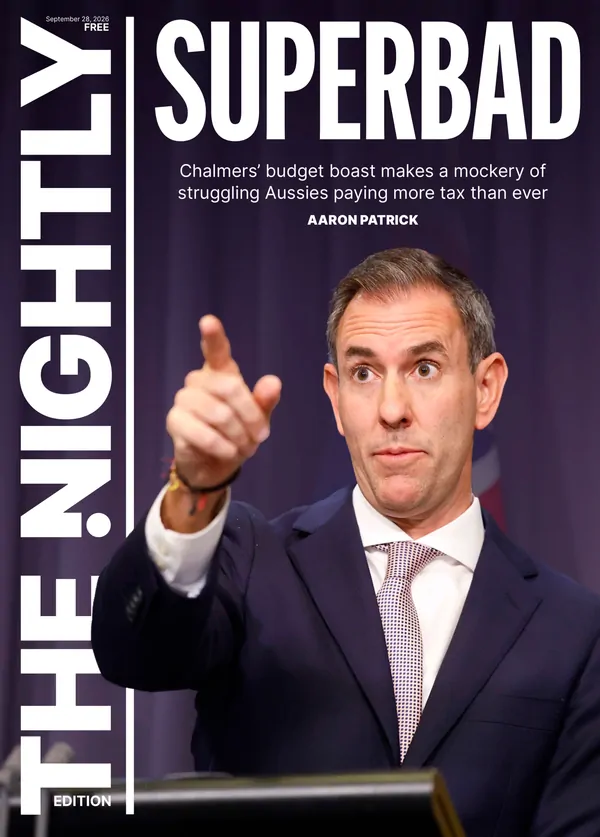
Treasurer Jim Chalmers rejected the Reserve Bank suggestion that Labor’s changes to negative gearing and capital gains tax concessions are to blame for a drop in Sydney and Melbourne house prices.
“We’ve seen some volatility in auction clearance rates even pre-dating the Budget,” he said in Canberra on Tuesday.
“Whether it’s auction clearances or house prices, there are a number of factors at play – interest rates, broader economic conditions – which go beyond the Budget’s changes,” he said.
The minutes of the June 16 meeting revealed the RBA’s monetary policy board members were concerned about inflation remaining above its 2-3 per cent target for a sustained period.
“Against that backdrop, members agreed that monetary policy needed to remain restrictive to unwind current excess demand through a period of below-trend growth,” it said.
While headline inflation moderated to 4 per cent in May, it was above the RBA’s target for the 10th straight month.
The board cited their May forecasts that “envisaged that it would be a further two years before inflation returned sustainably to target”.
Inflation was expected to remain at elevated levels despite historically weak consumer sentiment readings.
“Weak consumer sentiment does not necessarily signal future weakness in consumption,” the minutes said.
It also noted the neutral cash rate level - where monetary policy was neither seeking to stimulate nor slow the economy - would be higher than the existing 4.35 per cent cash rate as the construction of new data centres to power AI, the renewable energy transition and defence spending added to overall demand.
“Members observed that estimates of the real neutral rate had risen over preceding years – consistent with a global trend, which probably reflected factors such as increased investment in the energy transition, defence and, more recently, data centres – and were a little higher than when the cash rate target was previously at its current level,” the minutes said.
Australia’s big four banks - Commonwealth, ANZ, NAB and Westpac - are expecting rate cuts in 2027, but Westpac still sees two more hikes in August and September that would take the RBA cash rate to an 18-year high of 4.85 per cent.
ANZ head of Australian economics Adam Boyton said a rate rise was still a risk.
“The minutes underscore the board’s hawkishness and hence the risk of a further rate hike,” he said.
While Westpac is forecasting an August rate hike that would take the RBA cash rate to a 15-year high of 4.6 per cent, the futures market is only regarding an increase at the next meeting as a 19 per cent chance.