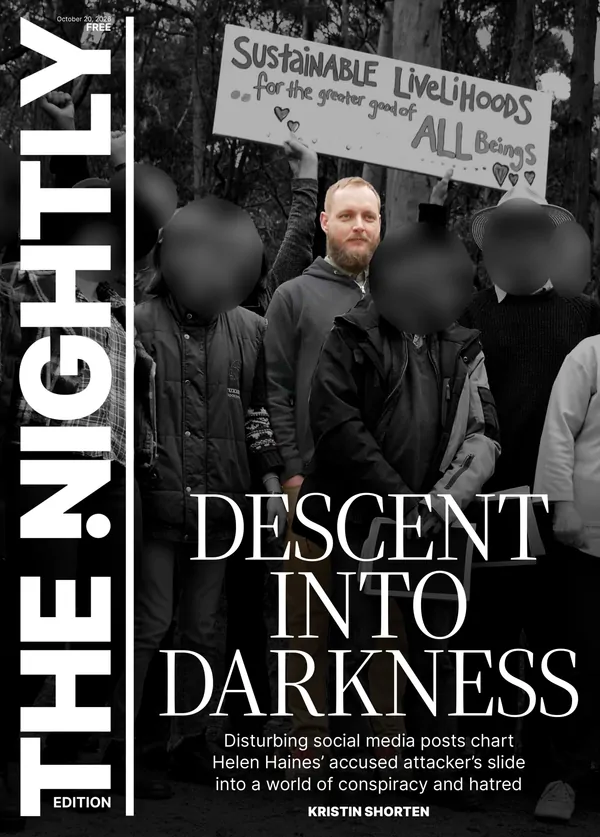
ANDREW GREENE: Helen Haines’ attack sent shockwaves through Parliament and forced a moment of self reflection
ANDREW GREENE: As the horrific details of the attack on Helen Haines filtered through group chats and messages to members of Parliament on Monday, shock and despair soon turned to the question of ‘why?’

Late on Monday afternoon as the horrific details of the attack on Helen Haines were filtering through, Federal politicians from all sides of Parliament were exchanging messages of shock and despair in private chat groups.
Their overwhelming feelings of dismay quickly turned to discussion about what could possibly have prompted such a violent act against one of their most beloved fellow MPs who was respected by all who worked with her.
Senior figures from the Government and opposition moved to assure their more junior colleagues that support would be available as they struggled to come to terms with the devastating attack against their fellow parliamentarian and fears for their own safety.
Sign up to The Nightly's newsletters.
Get the first look at the digital newspaper, curated daily stories and breaking headlines delivered to your inbox.
By continuing you agree to our Terms and Privacy Policy.Ahead of scheduled briefings from security officials to anxious MPs on Wednesday, ASIO boss Mike Burgess issued a public statement repeating his long-held concerns about the trajectory of political discourse in Australia.
“While political differences, debates and peaceful protests are essential parts of a healthy democracy, ASIO has seen direct correlations between inflamed language, inflamed tensions and acts of violence,” the intelligence chief noted.
“I have repeatedly put on the record my concern about the use of violent rhetoric in public discourse. Words matter,” Mr Burgess cautioned, echoing a sentiment repeatedly expressed by the Prime Minister since the Bondi terror attack.

“I genuinely believe the temperature of our security environment would be several degrees lower if we recommitted to conversing with civility, debating with respect and disagreeing with restraint.
For many MPs the horrific incident outside the Member for Indi’s electorate office in the Victorian town of Wangaratta was an inevitable moment they had been dreading for years.
Ever since the tough and prolonged lockdowns experienced during the COVID pandemic, Federal politicians have publicly and privately expressed concerns over a darkening mood in sections of the electorate and the growing dangers faced in their job.
Following the deadly terror attacks against Israel on October 7 three years ago, and widespread protests following the invasion of Gaza, the sense of dread about a violent act against an elected figure has grown, particularly after December’s Bondi shootings.
“I don’t think many Australians realise just how often their representatives are verbally abused or even physically threatened while out in public doing their job,” one Federal MP tells the Nightly.

Another MP privately laments how volatile certain sections of their electorate have become and how threats of violence are regularly made by activists from both the far right and far left fringes of politics.
“During COVID there was some really nasty stuff going on from various anti-establishment, anti-vaxxer types and now it’s the Gaza war protestors who are throwing blood at our electorate offices and spraying disgusting graffiti”.
With the initial shock of Monday’s attack now shifting to a wider national reflection about Australia’s current political climate there is also a broad consensus that this week’s events must be a turning point for the country.
Those sentiments have been shared by Kim Leadbeater, the sister of murdered UK MP Jo Cox, who has called on Australia to unite, saying: “this is your moment to think about what your politics looks like and how we can bring people together (and) find common ground”.
The PM has now conceded that even his side of politics must play its part in “lowering the temperature” of Australian political discourse, declaring he wants to only have robust debates about ideas and not motivations.
Inside Labor there has also been discussion about Anthony Albanese’s initial handling of this week’s tragic events including his first public comments as details of the attack were still unfolding.
Some in the Government believe that their leader’s Monday evening press conference failed to “hit the right tone” but they stress he should be given credit for consistently calling for the “temperature to be lowered” in public debate over recent months.
While violence against public officials is not uncommon around the world, Australia has rarely experienced events like this week’s attack, and the 1994 killing of NSW State Labor MP John Newman considered the country’s first and only political assassination.
Those who serve with Helen Haines in Federal Parliament continue to pray for her recovery, and a lowering of the temperature in parliament.
Sadly however the more immediate priority for many is to now also review their own personal safety measures while out in public performing their duties.