What you need to know about H5 bird flu, including symptoms, after Australia’s first suspected detection in WA
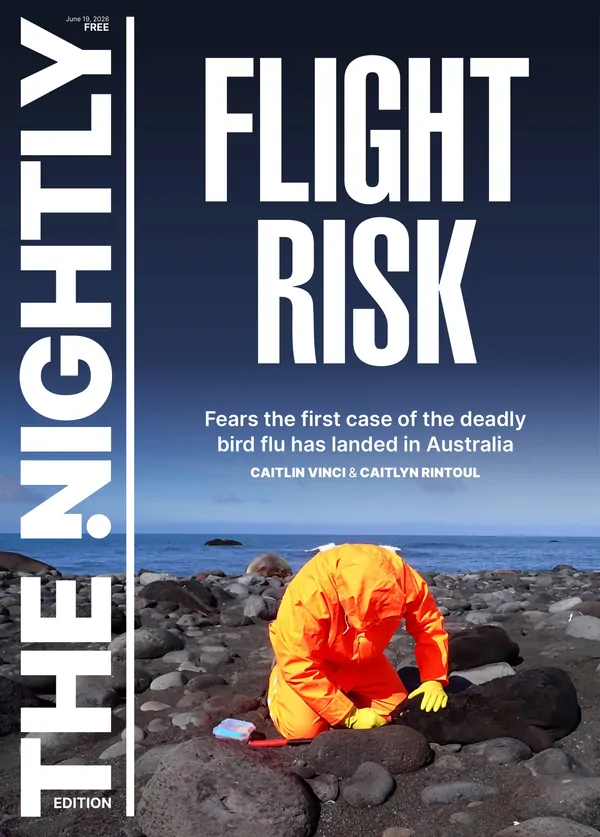
A suspected case of a highly infectious strain of the bird flu has been detected in Australia for the first time. Here’s everything you need to know about the virus.
Bird flu is a highly infectious virus that can also affect other animals, or occasionally humans, as well as birds.
The highly contagious H5 strain has never been detected in Australia before.
In other countries, the H5 strain has caused severe disease and high death rates in poultry, wild birds and affected mammals.
Sign up to The Nightly's newsletters.
Get the first look at the digital newspaper, curated daily stories and breaking headlines delivered to your inbox.
By continuing you agree to our Terms and Privacy Policy.The strain has spread rapidly across the world, carried by wild birds such as waterfowl, sea birds, birds of prey and scavengers, and spread through bodily fluids, droppings and feathers.
The disease has also been detected in dolphins and seals and wild animals such as polar bears.
Farm animals and domestic pets, including cats and dogs, have been affected by the virus, which can also be spread through contaminated clothing, shoes or items such as egg cartons.
Overseas, some people have also become seriously ill or died from bird flu after close contact with infected birds or contaminated areas.
There is no evidence that the H5 strain spreads between people.
Different strains of avian influenza, such as the H7, have previously caused serious outbreaks in poultry in Australia before being eradicated.
The Department of Agriculture, Fisheries and Forestry has urged anyone noticing sick or dead birds or other animals to record the location and report it to the 24-hour emergency animal disease hotline.
Common signs of bird flu in mammals include weakness, trouble breathing, tremors, seizures or walking in circles.
Wild birds may not be able to walk or fly properly and struggle to breathe.
Domesticated poultry may become lethargic and reluctant to eat or drink.
People infected with bird flu may show symptoms such as fever, cough, runny nose, conjunctivitis and fatigue.
Originally published on PerthNow