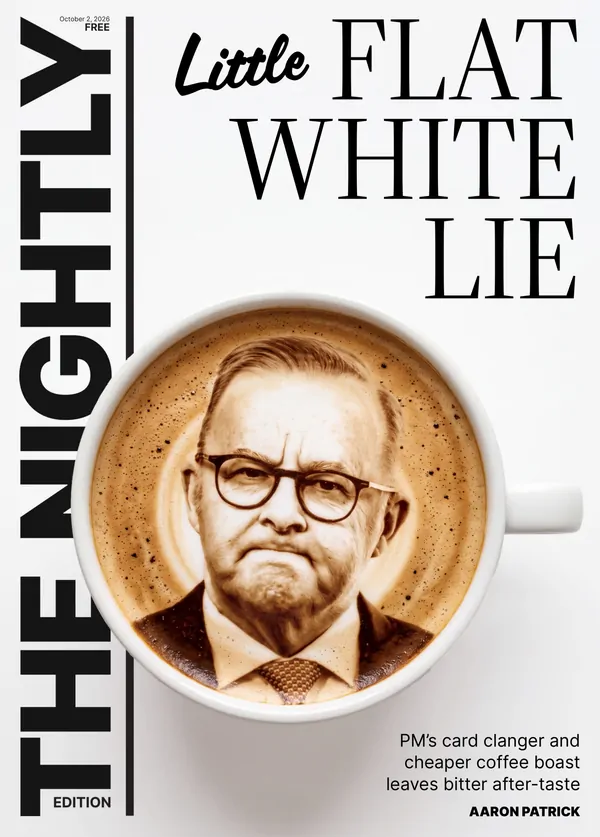
AARON PATRICK: Why is Albanese subsidising homes for future professors via the Housing Australia Future Fund?
AARON PATRICK: Taxpayers may question why benefits often go to people with an insider-like knowledge of how the system works, rather than the truly desperate, needy or marginalised.

In Adelaide on Monday, Anthony Albanese presented some real-life beneficiaries of the Housing Australia Future Fund, a subsidised housing scheme the Liberal Party reckons is so inept it should be abolished.
The national official auditor will publish an in-depth analysis of the $10 billion agency in a few months time. Until then, one way to judge the fund is by the lucky new house-owners who helped the Prime Minister make a political point this morning.
The lead speaker was a PhD student in public health at Adelaide University who bought a home in Bowden, a suburb that overlooks one of the largest green spaces enclosed by urban development in Australia, the Adelaide Park Lands.
Sign up to The Nightly's newsletters.
Get the first look at the digital newspaper, curated daily stories and breaking headlines delivered to your inbox.
By continuing you agree to our Terms and Privacy Policy.“We’re so lucky,” the student said they thought while moving in. “This feels too good to be true.”
Perhaps it should have been. While higher education is a noble pursuit, taxpayers may question why they are subsidising housing for future professionals. Most public health PhDs end up working in academia, the public service or healthcare.
Wrong priorities
A hint that what is known as the HAFF might have its priorities wrong is the suburb. In Bowden the average income is 44 per cent above the State average, according to the last census. There are few labourers. Almost everyone finished high school.
Public transport is plentiful, and Mr Albanese’s student is a big fan of riding around in a convoy with friends. A dozen live within a two kilometre radius.
“The sense of community definitely can’t be understated,” they said. “I think something that’s just fun to mention is a bike bus we do with our friends. So all of us take our bikes to the city, there’s like five of us in a row taking a bike, and that’s not possible in a lot of areas of the state.”
Mr Albanese created the fund in 2023, he said, to help the most needy, not create a route to property-owning prosperity for the clever middle classes. The beneficiaries are meant to include women and children fleeing violence at home, older women at risk of homelessness, military veterans, Indigenous Australians and “frontline” workers such as nurses, police officers and cleaners.Promoting a Budget framed as helping young people into home ownership, Mr Albanese often talks about last year’s expansion of the subsidy allowing people without a house or apartment to buy one with a 5 per cent deposit. An even more generous program that started in December does not get as much airtime. Called the shared equity scheme, the government contributes 30 to 40 per cent of the cost of houses, apartments and land for individuals who earn less than $100,000 a year.Buyers only have to provide 2 per cent of the purchase price, making an apartment in central Sydney buyable for $26,000.A buyer through the shared-equity scheme also appeared at Mr Albanese’s press conference. An employee of the Fair Work Commission, which settles disputes between unions and employers, the buyer said they were able to save for a deposit in a new apartment complex by living with their parents.The Prime Minister’s buyer has a law degree, worked at the South Australian Housing Trust, the agency that provides public housing in the state, and is an “advocate for systemic reform and in elevating the voices of marginalised communities”, according to public records. Her apartment was built by the Housing Australia Future Fund and the South Australian government.“I also do know that it has come from an incredible place of privilege, where people who, for example, some don’t have the access that I had,” the 2 per cent-deposit buyer said at Monday’s’s press conference.
Shut the HAFF?
That privilege could last a lifetime. Because the houses and apartments are lived in by their owners, none of the buyers who spoke today will have to pay capital gains tax, unlike landlords who will own rental properties after 2027.
Andrew Bragg, the Opposition housing spokesman, told The Nightly there should probably be more public housing for the poor, given the average home surpassed $1 million a year ago. The Coalition wants the HAFF shut down because it has only built 400 to 600 homes over two-and-a-half years, according to Senator Bragg. The target is 40,000 in the next three years. “This thing has a lot money, has been very slow and has got a lot of governance problems,” Senator Bragg said. The Government disputes his figures. This morning the head of Housing Australia told a Senate committee 1432 homes “are now complete”, although acknowledged that 670 were built by property developers who were paid once they were finished. The problem with such well-intentioned subsidises is there is never enough money for everyone. The benefits often go to people with an insider-like knowledge of how the system works, rather than the truly desperate, needy or marginalised. That hasn’t stopped the Prime Minister making subsidised housing a central part of his Budget promotion tour“So whether you’re someone who needs social housing, whether you’re someone in a private rental, or you want to own your own home, our plan is comprehensive, and it’s been added to because we know that we needed to do more on supply,” Mr Albanese said. The Prime Minister is correct. The government is doing a lot, but it can’t do everything. If only there was another solution to providing housing, where people are treated equally, there are options for the rich, poor and middle class, and taxpayers don’t have to get involved.
You don’t hear much about it these days, but it used to be called the free market.