Editorial: Now it really does feel like a recession
Reserve Bank chief Michele Bullock warned us it would feel like a recession. She was right.

As governor of the nation’s central bank, Michele Bullock’s desk would be swamped with data.
Inflation, Gross Domestic Product, productivity, unemployment, house prices, household spending, business investment, retail sales and so on and on.
From it all the Reserve Bank of Australia then considers where we are and where we are headed, and puts a number on the cash rate — which to those of us with housing loans to pay, means interest rates.
Sign up to The Nightly's newsletters.
Get the first look at the digital newspaper, curated daily stories and breaking headlines delivered to your inbox.
By continuing you agree to our Terms and Privacy Policy.After the RBA hiked interest rates for the fifth time this year to 4.85 per cent — and fingers of blame pointed towards the Albanese Government’s excessive spending for driving up inflation the bank was trying to tame — Ms Bullock sketched a bleak outlook.
She signalled interest rates could still rise again in 2027 after the RBA released new forecasts predicting inflation won’t return to the mid-point of its 2-3 per cent target until mid-2028, with price pressures “baked in” for another year as inflation remained a homegrown problem despite the Iran war.
Central bankers often speak in a guarded or jargon-heavy way.
But Ms Bullock went on to nail the situation in just a few very direct and easy to understand words.
“It is going to make people feel like it’s a recession,” she said.
We now know exactly what she was talking about.
On Wednesday news broke that one of the nation’s startup darlings, Canva, will cut or relocate up to 1200 jobs.
Chief executive Melanie Perkins said the firm needed to be “refound” after its growth slowed “for the first time in a decade”.
While not explicitly mentioning AI, Canva said “new technology” had changed the graphic design market and led to its first round of redundancies since inception in 2013.
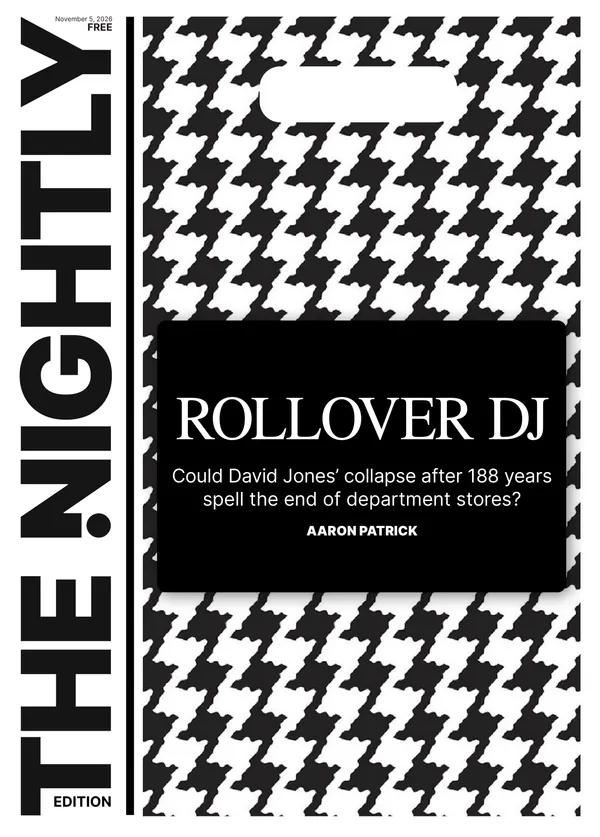
On Thursday morning iconic 188-year-old retailer David Jones was placed into administration.
David Jones chief executive Erica Berchtold blamed the store’s demise on global pressure, too many stores and an excessive cost base.
There was another jolt with the revelation Australia’s biggest oil and gas company Woodside Energy will cut 500 jobs, or about 10 per cent of its workforce, as part of a new target to cut costs by nearly $600 million a year.
Then National Australia Bank chief Andrew Irvine referred to the “R” word.
Nationally, NAB expects economic growth to slow to about one per cent next year, with Mr Irvine warning the full impact of this year’s interest rate rises had yet to flow through to customers.
“We are hearing things are getting tougher,” he said. “We don’t think a recession is the most likely scenario, but it’s probably increased in terms of its probability.”
And new figures from the Australian Bureau of Statistics showed Australia’s Federal public sector wage bill had surged more than 7 per cent during the last financial year to more than $43bn — adding further fuel to claims of excessive Federal Government spending and piling further pressure on the Albanese Government.
Meanwhile RBA deputy governor Andrew Hauser warned waning trust in the bank’s ability to get inflation under control could see businesses raise their prices, prolonging Australia’s inflation crisis.
Ms Bullock, you were right. It does feel like a recession.