MARK RILEY: Albanese may have Pauline Hanson to thank for the fact he is still Prime Minister
In ordinary times, Anthony Albanese’s dismal polling would have the Labor caucus sharpening its knives. But these are not ordinary times.

At the end of one of the worst weeks for his Government in the 18 months since its re-election, Anthony Albanese would be happy about one thing.
He would be relieved that Australia doesn’t have midterm elections.
If it did, his mega-majority in the House of Representatives would become a miniature majority on current polling.
Sign up to The Nightly's newsletters.
Get the first look at the digital newspaper, curated daily stories and breaking headlines delivered to your inbox.
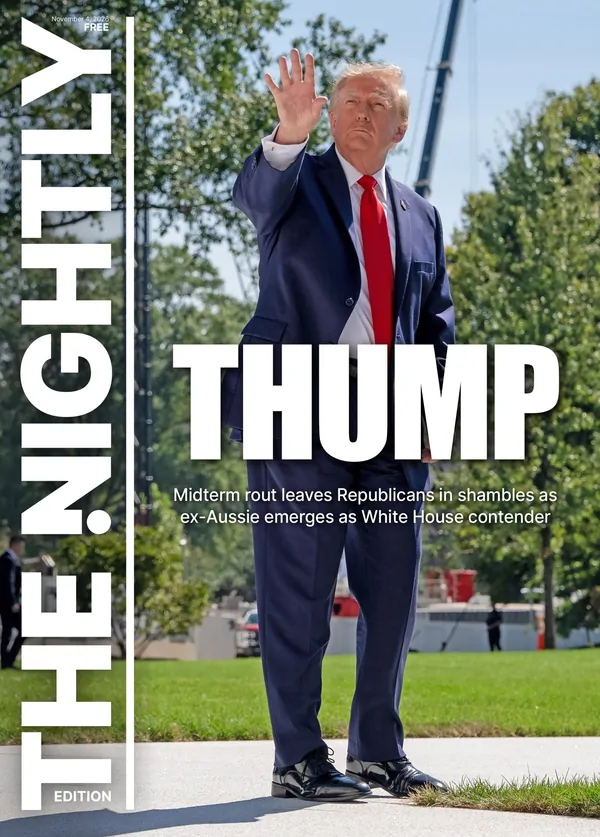
By continuing you agree to our Terms and Privacy Policy.And, as his Labor Government passes the halfway point of its second term, Albanese would be suffering a similar fate to Donald Trump.
Labor is either level-pegging or a point behind One Nation in the major polls, sitting on a primary vote of about 27 per cent.
In years gone by, such an insipid polling performance would have been enough to ignite febrile speculation within the Labor caucus about dumping their leader.
But these are not ordinary times.
Far from it.
The One Nation wave has changed everything.
Never has the dominance of the two major parties been under such sustained assault by an ascendant third player.
The Greens under Bob Brown won a record 13.1 per cent in the tumultuous 2010 election that delivered the hung parliament.
Don Chipp’s Democrats won 12.6 in 1990 and the anti-communist, pro-Catholic “Groupers” of the DLP peaked at 11 in the 1970 election.
Primary support for Pauline Hanson’s orange army far outstrips all of them. It has been as high as 31 per cent in the major polls.
It is highly unlikely to return anything like that once its policies and costings are put to the intense scrutiny of a Federal election campaign.
But even if it manages just half of that at the 2028 election it would still be rewriting the history books.
The same political pressures that swept the Democrats to control of both houses of the Congress this week are pounding our politics, but with different effect.
Where the boiling discontent over high petrol prices, high interest rates, rising unemployment and lagging wages in the US has driven traditional Republicans away from Donald Trump’s MAGA base to the Democrats, in Australia it is driving voters away from the major parties towards One Nation.
The impact is much more severe on the Coalition, particularly the Nationals. But Labor is not immune.
The ALP’s primary vote has plummeted by 7.5 points since the Federal election.
The controversy over the Government’s response to the Bondi massacre raised serious questions about its competence on national security and fired a furious debate about its fractious relationship with Israel.
But it was the breach of trust on the negative gearing and capital gains tax changes in the Budget that really fractured its relationship with middle Australia.
A Government that inspired a groundswell of support with a compelling promise to be different proved itself to be just the same.
It, too, was willing to say one thing before an election and do the opposite once in power.
Voters hate that.
With that one decision, the Albanese Government cashed in a considerable amount of the goodwill it had earned over the past four years.
And now it is paying the price.
Without that reflexive goodwill, the Government finds itself dangerously exposed as it now struggles to respond to a persistent and corrosive economic challenge.
The broadening divide with the Reserve Bank on how much Government spending is contributing to the problem is a complicating factor.
Albanese and Jim Chalmers rightly point out that the spike in world oil prices fuelled by Trump’s war in Iran is the major contributing factor.
But RBA governor Michele Bullock made clear this week that her primary objective in raising interest rates was to subdue the underlying domestic pressures that had already driven inflation back into the danger zone before the first US and Israeli missiles began raining down on Tehran.
Albanese is now promising to respond with “hard decisions” to cut government spending in the December mid-year budget update.
But he is tempering expectations of any upfront payments or immediate tax relief to ease cost-of-living pressures. That would simply fire inflation even higher.
Finance Minister Katy Gallagher was up front this week in warning Australians that they faced a tough year ahead as the Government tried to bring inflation back under control.
It is a make-or-break year for the Government.
Its strategists hope it’s one in which the political and economic cycles will align.
They hope inflation and interest rates begin to fall into early 2028, giving the Government a more positive platform to seek a third term at the next election.
But the first step is to fix its mid-term malaise before it develops into a full-term catastrophe.