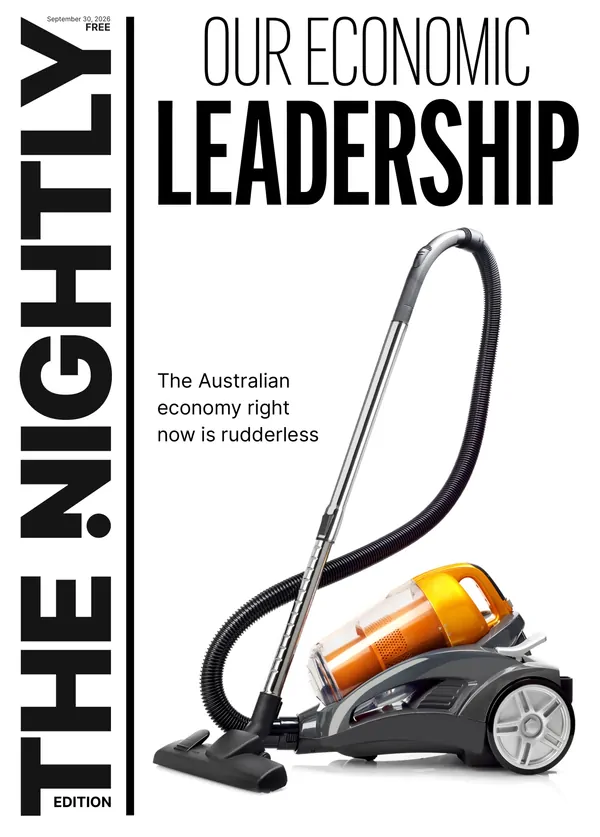
EDITORIAL: Daily focus on fuel masks long-term economic impact
The daily information overload around the impact of the war is obscuring the need for thoughtful long-term planning.

Four weeks into the war in the Middle East and things look bleak.
And yet if we thought it was bad now, we need to take a deep breath.
To quote the song released by Bachman-Turner Overdrive in 1974 between the decade’s first and second oil crisis: You ain’t seen nothing yet.
Sign up to The Nightly's newsletters.
Get the first look at the digital newspaper, curated daily stories and breaking headlines delivered to your inbox.
By continuing you agree to our Terms and Privacy Policy.To recap: The 1973 oil shock came about after supply restrictions were imposed by the Organisation of Oil Exporting Countries in response to the Yom Kippur War between Arab states and Israel.
The shock pushed inflation in Australia to 18 per cent and unemployment went from 4 per cent to 6 per cent.
The 1979 Iranian revolution again hit global oil production, oil prices doubled, inflation in Australia went above 10 per cent and unemployment soared from 6 per cent to 10 per cent.
This week International Energy Agency boss Fatih Birol warned the current energy crisis had eclipsed the 1970s oil shocks which “led the world to recession”.
Oil isn’t used just for vehicles and machinery. By-products from oil include plastics, chemicals, asphalts, pesticides and fertilisers.
“It’s not only oil and gas, all these petrochemical products, the sulphur, many different fertilisers — very important fertilisers — if it’s (the supply crisis) prolonged, we may well have implications for the agriculture sector and food prices,” Dr Birol said.
Farmers are already concerned about fertiliser supplies ahead of the winter sowing season.
If they can’t sow or grow crops, or have to pass on the extra costs of transporting their produce to the marketplace, then our supermarket bills will keep going up.
Treasurer Jim Chalmers has warned that the economic impacts of the war could be as damaging as the 2008 global financial crisis and COVID-19.
“This is the fifth big global economic shock in less than two decades, it could be just as serious as the four before it,” Dr Chalmers said on Tuesday.
“Two things matter most here, how long the war lasts — but also how long it takes to get the global economy back on track after it ends.”
Just last week, Dr Chalmers said Treasury modelling suggested inflation could reach 5 per cent this year — the highest point since September 2023 as the country was shaking off lockdown-fuelled pandemic supply chain disruptions.
Keep in mind the Reserve Bank of Australia’s target is to keep inflation between 2 and 3 per cent.
On Wednesday Dr Chalmers said the previous Treasury modelling looked “pretty conservative now”.
Also feeding into the overall picture is the impact of AI, which is shredding job numbers.
With the outlook seemingly changing daily, it is difficult to see how any of Treasury’s calculations will be relevant when Dr Chalmers hands down his Budget on May 12.
Questions abound. How did we counter the oil shocks of the 70s? Are the lessons of the time still relevant?
The daily information overload around the impact of the war is obscuring the need for longer term planning.
Can we please start thinking about that? And talking about it?