New Reserve Bank monetary policy board Melinda Cilento disagrees with governor Michele Bullock over AI
A new Reserve Bank monetary policy board member has expressed a disagreement with Governor Michele Bullock on a key development in Australia.

A new Reserve Bank board member deciding interest rates has revealed she disagrees with RBA Governor Michele Bullock on AI.
With consumers cutting back on household spending, data centres to power artificial intelligence are adding to already-elevated price pressures.
Opinion about the benefits of AI during a productivity and inflation crisis is divided on the Reserve Bank’s nine-member monetary policy board.
Sign up to The Nightly's newsletters.
Get the first look at the digital newspaper, curated daily stories and breaking headlines delivered to your inbox.
By continuing you agree to our Terms and Privacy Policy.Melinda Cilento, Labor’s new appointment to that board, disagreed with Ms Bullock for last week suggesting that AI was the solution to Australia’s productivity crisis.
“So, I think, yes, it is the great white hope. AI is the great white hope to improve productivity,” Ms Bullock told a CEDA forum.
“It’s also an opportunity possibly for growth, for the same amount of labour to be producing more.”
But Ms Cilento, who is chief executive of the CEDA think tank, said AI investment alone would be insufficient to boost productivity.
“So, the hard question is not whether but how Australia moves from investment to impact,” she said.
“The tools alone will not deliver. Real gains will come from what organisations do with them: moving past pilots and fundamentally reshaping how businesses run to capture and create new opportunities.
“Success depends on leadership, an empowered and adaptable workforce, and above all on a willingness to do things differently.”
Ms Cilento also criticised Treasury’s Intergenerational Report for suggesting long-term productivity growth could be boosted to 1.2 per cent after five years of average annual growth of minus 0.5 per cent.
“The Intergenerational Report looks primarily to AI to help reconcile our recent lacklustre productivity performance with long-term potential. Indeed, the term ‘AI’ appears 508 times in the report,” she said.
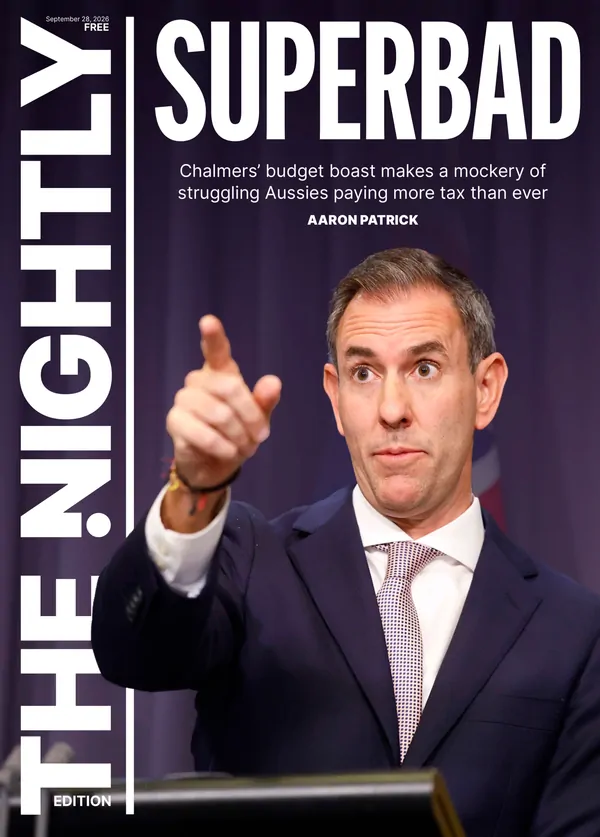
Treasurer Jim Chalmers, who last month appointed Ms Cilento to the RBA monetary policy board, has talked up the need to tackle weak productivity.
“We have made a lot of progress in the Budget, and that’s because we accept responsibility for our part in the fight against inflation, managing the Budget responsibly, providing that cost‑of‑living relief at the same time as we work on some of these longer‑term economic challenges like productivity,” Dr Chalmers told News24 on Tuesday.
Dr Chalmers also suggested home borrowers were already bracing for a rate hike.
“We do know that a lot of Australians are bracing for that outcome, and that’s because it’s the universal or near-universal expectation of economists and markets that we will see rates go up this afternoon,” the Treasurer said.
Hours before the RBA decision was announced, new Australian Bureau of Statistics data showed household spending was flat in August, following the Reserve Bank’s rate hikes in February, March and May and the end of the Federal Government’s fuel excise relief.
“Higher fuel prices are squeezing household budgets and prompting consumers to start cutting back on some discretionary purchases,” AMP economist My Bui said.
Monthly spending fell for recreation and culture, health, clothing and footwear, alcohol, food and furnishings and household equipment.
Overall spending, however, was up 6.8 per cent over the year.
“Annual gains in spending still exceed what inflation and population growth alone would imply, suggesting real spending volumes fell in August but remain elevated,” Ms Bui said.
ANZ economists Sophia Angala and Jasmine Zheng are expecting annual household consumption growth to ease to 1.7 per cent in 2026, down from 2.5 per cent in 2025.