Fears interest rate rises, Labor’s Budget taxes will stall home building approvals momentum
Housing experts fear interest rate rises and house price falls will worsen Australia’s housing supply crisis. See their warning.

Property developers fear rate rises and sharp home price falls will make Australia’s housing crisis worse.
During the year to September 30, 208,318 new residential home building applications were approved by local councils and State governments, new Australian Bureau of Statistics data showed.
The annual pace of building approvals remained well below Labor’s National Housing Accord target of building 1.2 million homes over five years, which would require an annual average of 240,000 to influence future home completions.
Sign up to The Nightly's newsletters.
Get the first look at the digital newspaper, curated daily stories and breaking headlines delivered to your inbox.
By continuing you agree to our Terms and Privacy Policy.The total number of new homes approved in September rose by a monthly pace of 5.1 per cent to 17,948, but an annual basis, it was 0.8 per cent weaker.
Westpac economist Luka Belobrajdic said the first annual contraction in building approvals since January — before the Reserve Bank began the first of four rate hikes — was a bad sign for the building sector.
“Interest rate increases, the sharp downturn in established housing markets and rising costs are likely to weigh on further growth, with pessimistic consumer sentiment an additional headwind,” he said.

Tom Forrest, the chief executive of Urban Taskforce, which represents property developers, said interest rate rises so far this year and Labor’s changes to negative gearing and capital gains tax concessions were a threat to future building approvals and therefore new home completions.
“The rate of growth has slowed and concerns remain that the impact of interest rate rises and the Federal Budget tax changes are yet to flow through,” he told The Nightly.

Mr Forrest argued the latest building approvals data was more a reflection on the RBA’s three rate cuts in 2025, and therefore didn’t factor in the worsening inflation crisis sparked by the start of the Iran war in February this year.
“The big factors holding back housing applications, and therefore approvals and also commencements, are yet to flow through to the ABS data,” he said.
“That is because it takes at least 12 months for an application for new housing, of any volume, to be assessed and approved.
“So, the approvals data released today reflects the mood of around September-November 2025.”
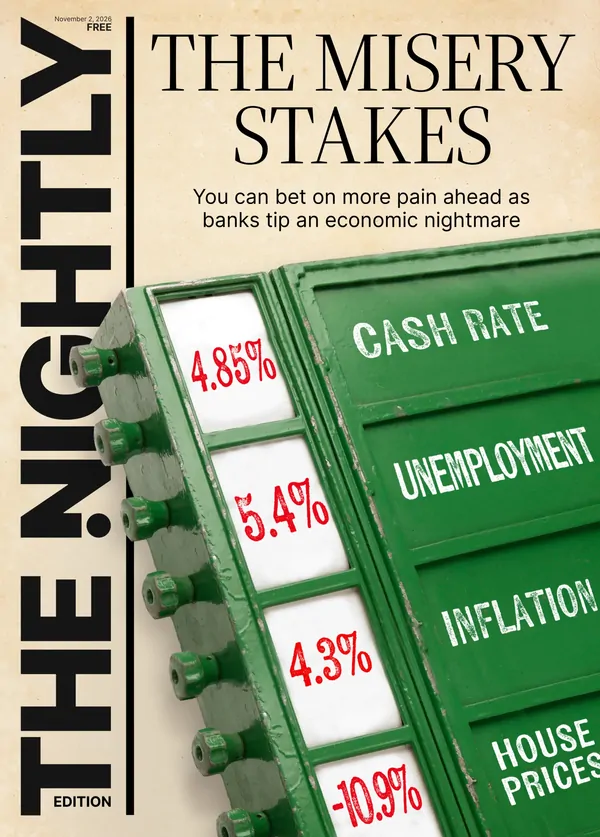
The prospect of a fifth rate hike for 2026 on Tuesday, that would take the Reserve Bank cash rate to an 18-year high of 4.85 per cent, is weighing down the housing market with new Cotality data showing a 5 per cent drop in capital city house prices in the three months to October 31.
Apartment values are also falling with Brisbane’s median apartment price falling by 5.6 per cent during the quarter compared with a 6 per cent decline over three months in Perth.
These falling prices would take away the incentive for developers to want to build new apartments that boost the supply of housing.
“Housing prices have collapsed because of a lack of confidence, not because governments at all levels have reduced the cost of construction,” Mr Forrest said.
“The one area where this is not the case is in planning assessment and approvals, where significant change has been achieved.
“But, as the cliché goes, you can’t live in a planning approval. If it is not feasible to build the new homes, the approvals will not result in the new housing we need.”
Among the big states, NSW had the lowest per capita building approvals of 6.2 for every 1000 people, which was well below the national average of 7.5.

Stuart Ayres, the chief executive of Urban Development Institute of NSW, said apartments were becoming less feasible with the national ABS figures showing a 20.5 per cent annual decline in the volatile unit approvals sector.