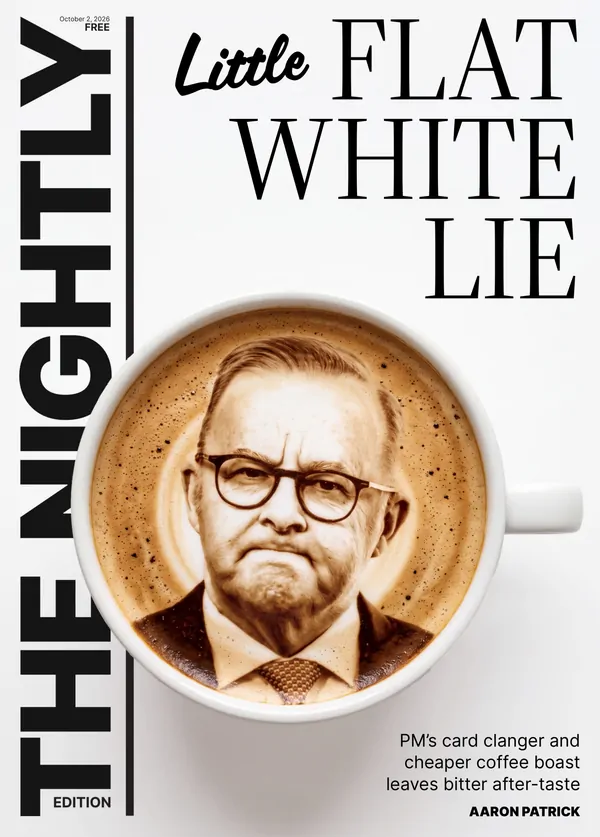
Surcharge fees on Australian card payments to be banned from October 1, following Reserve Bank decision
Australian consumers will no longer have to pay surcharge fees and debit and credit card payments from October 1, following a Reserve Bank ruling. But the RBA admitted businesses could raise consumer prices.

Australian consumers will no longer have to pay surcharges on tap-and-go card payments following a Reserve Bank ruling - but there are fears businesses could put up their prices to cover this ban coming into effect in October.
The RBA’s Payments System Board decision announced on Tuesday means surcharge fees will be banned on debit, credit, EFTPOS, Mastercard and Visa payments.
Since 2003, consumers have paid surcharge fees on top of what it costs to do the actual transaction.
Sign up to The Nightly's newsletters.
Get the first look at the digital newspaper, curated daily stories and breaking headlines delivered to your inbox.
By continuing you agree to our Terms and Privacy Policy.But from October 1, 2026, Australia will ban surcharge fees like the European Union, with the Reserve Bank noting they were hard to avoid with cash now making up less than 13 per cent of all in-person transactions.
“Surcharging is no longer achieving its intended purpose,” it said.
“Previously, surcharging encouraged consumers to use cheaper payment methods. However, it has become harder for consumers to avoid surcharges.”
The RBA noted only 16 per cent of businesses were applying a surcharge but suggested they may hike their costs to cover the ban on surcharge fees.
“The 16 per cent of merchants that currently surcharge may increase their advertised prices to cover the cost of accepting card payments,” it said.
Just 13 per cent of consumers are told about surcharges when they shop, the RBA said citing JWS Research.
A separate measure to cap interchange fees, or the cost of processing a transaction, is likely to see the banks cut back on credit card reward points, MST Financial senior research analyst Brian Johnson told The Nightly.
“It’s like a one to two per cent earnings hit - it’s not very big in the scheme of things - and they can easily offset that by chopping back the benefits you get on a credit card,” he said. “That’s the most logical outcome.”
Credit card giant Visa said banning surcharge fees and capping interchange charges could see consumers end up paying more for purchases.
“Until there is parity in regulation across all payment methods in Australia, more expensive, unregulated options will continue to bring up the overall cost for consumers and businesses,” Visa’s group country manager for Oceania Alan Machet said.
Prime Minister Anthony Albanese and Treasurer Jim Chalmers in October 2024 promised surcharging would be banned from January 1, 2026, pending an RBA review.
With the change coming into effect nine months later than promised, Dr Chalmers said Australian consumers would save $1.6 billion a year in surcharges while small businesses would save $910 million in wholesale costs.
“Australians hate paying these charges, let’s be blunt about it,” he told reporters in Canberra on Tuesday.
“These changes will help take some of the pressures off consumers and businesses and help with the cost of living.
“We’ve made it really clear for some time now that people shouldn’t be punished for using a credit or a debit card.”
The big banks had supported the RBA plan, announced last year, to scrap surcharge fees or what merchants charge customers on top of the actual cost of doing a transaction, which would bring Australia into line with the EU.
But they opposed to the Reserve Bank’s separate proposal to curb interchange fees for consumer credit cards at 0.3 per cent of a transaction, down from the existing 0.8 per cent level to cover what it actually costs the likes of Visa and Mastercard to process a payment. This change is coming into effect later on April 1, 2027.
The interchange fee cap for pre-paid card transactions in Australia has been lowered to eight cents, down from 10 cents, based on the fees not exceeding 0.16 per cent of a transaction.
Foreign-issued card transactions will have an interchange fee cap of 1 per cent.
The Australian Banking Association is annoyed that foreign bankers won’t be required to fund the New Payments Platform, which debuted in 2018 with funding from Australian banks charging interchange fees.
“The RBA’s decision will see foreign multinationals extract an increasing share of revenue from the payments system to the long-term detriment of Australia,” chief executive Simon Birmingham said.
But Dr Chalmers said capping interchange fees would make transactions simpler for consumers and boost competition among card providers.
“What these changes will do will give consumers more certainty and transparency about the total cost of goods and services when they pay by card and it will lower fees for businesses,” he said.
“We know the current rules are difficult to follow and so this will simplify the arrangements as well.”
The Commonwealth Bank and Westpac last year argued capping interchange fees would force consumers to pay more for everyday goods, giving them less access to credit and cost them frequent-flyer-type rewards.
“No doubt, not every part of the economy will be happy about this,” Dr Chalmers said.
“There will be reactions about it. Often, when changes of this magnitude are proposed, there will be people who are supportive of it and people who oppose it - we expect that.”
Under the changes, EFTPOS, Mastercard, Visa will also be required to publish the debit, credit and pre-paid card fees they charge to help businesses compare.
The changes are coming into effect without the need for Parliament to pass new legislation, given the RBA is in charge of Australia’s payments system.
The Australian Competition and Consumer Commission will join the RBA in monitoring the card payment changes.