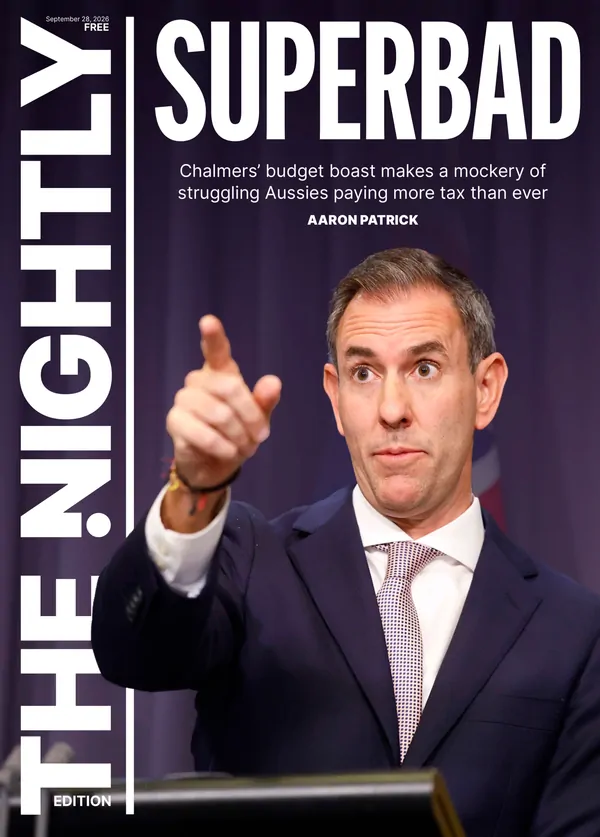
AARON PATRICK: How the Budget could turn voters against Anthony Albanese
AARON PATRICK: Voters can forgive politicians for lying. But the taxation changes could trigger big falls in property prices that hurt millions.

In the future, when experts assess when the Albanese Government’s political ascendency began to waiver, the 2026 Budget could be the turning point.
That’s for two reasons. Anthony Albanese is being accused by interviewers of lying about the decision to phase out most tax concessions for property investments. The Budget demonstrates the government’s preference for younger and poorer voters at the expense of the older middle classes.
Baby boomers, and to a lesser extent generation X, were marginalised by the Budget’s tax changes, a historic shift in political power.
Sign up to The Nightly's newsletters.
Get the first look at the digital newspaper, curated daily stories and breaking headlines delivered to your inbox.
By continuing you agree to our Terms and Privacy Policy.With the right at war with itself, the Government holding a huge parliamentary majority and migration remaking Australia’s ethnic makeup, the Labor Party is executing a plan in gestation since the end of the Keating government to redistribute wealth and enlarge the State.
On Wednesday, the focus was on Mr Albanese’s honesty. In interview after interview the Prime Minister was asked a version of the same question: how can you be trusted after ruling out changes to negative gearing and capital gains tax?
Michael Usher, on the Seven Network, asked a question that would have been considered weird before last night, and now sounds entirely legitimate. “Are you now considering a death tax?” he said on the Sunrise program.
“No, we’re not,” Mr Albanese replied.
Can we believe him? It is impossible to know. Inheritance taxes likely have considerable unstated support among Labor Party members and officials. They could conceivably be introduced, slowly, after the next election if the Labor Party wins under Mr Albanese’s commitment to what he calls “intergenerational equity”.
Politicians who change minds — or attribute a policy shift to a change in circumstances — aren’t necessarily punished by voters.
Mr Albanese and Treasurer Jim Chalmers substantially altered what was known as the “Stage 3” income taxes in 2024 to the detriment of many in the middle class. Promoting the changes as being in the interest of fairness, they won the following election with the biggest Labor majority ever.
The electorate, though, has limited tolerance for being misled, especially over a national obsession like investing in houses and apartments to rent.
Some two million Australians own investment properties, many of them blue-collar workers who began saving for deposits when their friends were blowing their wages in nightclubs.
About 70 per cent of Australians own their homes, and are acutely sensitive to property prices. Falls on Tuesday in bank shares, led by a 10 per cent tumble by the Commonwealth Bank of Australia, are a warning signal for the housing market.
One of the main sources of capital for houses and apartments is about to be entirely removed. The impact is unclear, and will be greater in some parts of Australia, but concerns are already building about the most important asset most people will ever own.
“I think it’s clear to everyone that property purchases by investors will slow following the tax changes,” Sherman Chan, the chief economist of the Australian Property Institute, said Wednesday. “Which is why overall property price growth is also expected to slow.”
There are already signs that is happening. In the weeks before the Budget, when leaks emerged about the changes, a buyers boycott began. In Melbourne, the proportion of properties sold at auction fell to 42 per cent. In Sydney, the figure was 36 per cent.
If these low clearance rates continue, history shows property prices in both cities could fall between 5 and 10 per cent over the next year, according Louis Christopher, the owner of SQM Research, which tracks property prices.
Normally such a fall would be good for people buying their first homes and renters, who are struggling in a market where vacancies are 1.2 per cent. And the new rules will leave newly built apartment buildings as one of the few tax shelters left for professional investors.
But Mr Christopher, who supports changes to property taxes, expressed concern investors would be scared off from new apartment buildings if property prices fall, especially in the Sydney and Melbourne metropolises. Many will not get built without their support.
“To make adverse tax changes during the time we have already got a tight rental market is not ideal timing,” he said Wednesday. “The ideal time is when we have a surplus” of rental properties available.
Getting through the disruptive effects of the tax changes could take three years, he said.
Another consequence of the changes could have the opposite effect at the top end of the market.
Homes people own and live in are not subject to capital gains tax, which is applied to increases in value.
A rational person, seeking to minimise her taxes, should buy as an expensive a house or apartment as they can afford to avoid paying tax if the properties become more valuable.
Which means the billionaires’ mansions of Sydney, Melbourne, Perth, Brisbane and Adelaide will be worth even more.
Which may not be what Mr Albanese intended when he decided to tax the “rich”.