Bill Shorten’s to-do list: How Labor could implement other policies voters rejected at the 2019 election
Labor could potentially introduce other radical policies rejected by the electorate in 2019, with Tuesday’s Budget just the beginning. A former Labor MP warned it could exploit its huge parliamentary majority.

Labor is introducing hated policies rejected by voters in 2019 and now there are fears it will impose even more radical policies from Bill Shorten’s to-do list to take advantage of a diminished Coalition.
Prime Minister Anthony Albanese could potentially go further than targeting property investors, from reviving the push for a republic to punishing families with trust accounts, given Labor has its biggest parliamentary majority since World War II.
Having lost an “unlosable” election with a far-reaching manifesto in 2019, Labor since coming to power four years ago has been gradually dusting off policies the electorate shunned seven years ago.
Sign up to The Nightly's newsletters.
Get the first look at the digital newspaper, curated daily stories and breaking headlines delivered to your inbox.
By continuing you agree to our Terms and Privacy Policy.“I’m happy to say this — disillusioned with this socialist left-dominated government,” former Labor MP Michael Danby told The Nightly.
Going by Tuesday night’s Budget, changes to negative gearing and the capital gains tax concessions could be far from the only items revived from Labor’s doomed 2019 election platform.
In Government, Labor has 94 seats in the lower house — giving it the biggest majority since 1943 against a Coalition trailing One Nation in the opinion polls.
With help from the Greens in the Senate, Labor’s higher-taxing policies have a good chance of being passed into law.
“I just think that they’re so far out from an election, they’ve got such a big majority and they think they can get away with it,” Mr Danby said.
In its first term, Labor put forward a referendum on the Voice to Parliament, which was a 2019 policy to enshrine an Indigenous body in the Constitution.
While that was overwhelmingly rejected in 2023, that may not stop the Albanese Government from pushing for a republic, despite the proposal for a directly elected president being resounding voted down in every state at another referendum in 1999.
The ALP in 2019 promised a vote on replacing the Queen within its first term.
With King Charles now on the throne, Mr Albanese could try to amend the Constitution to fit Labor’s national platform which commits it to “work toward establishing an Australian republic with an Australian head of state”.
Labor in its first term also legislated a 43 per cent reduction in carbon emissions by 2030, broadly in line with its 2019 pledge.
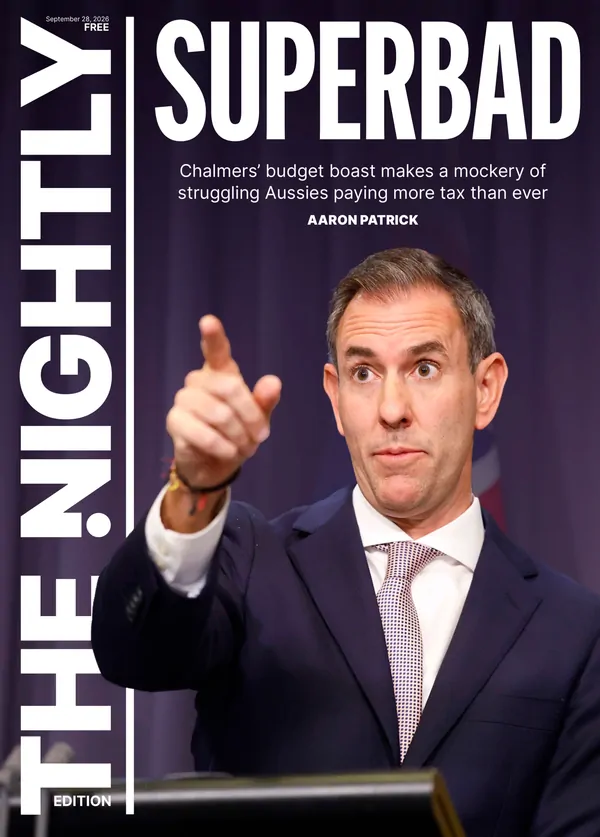
When it came to property investors, Treasurer Jim Chalmers has used his fifth Budget to position Labor as the party of intergenerational fairness that would make the tax system “fairer and stronger for workers, businesses, first home buyers and future generations”.
“Responding to the pressures of the here‑and‑now while embracing our intergenerational responsibilities,” he told Parliament on Tuesday night.
The Treasurer used similar language to Mr Shorten, who as former Opposition leader more stridently declared war on property investors ahead of the May 2019 election.
“We will end the intergenerational unfairness in our tax system that puts property investors ahead of first home buyers,” he told party faithful in Brisbane 13 days before polling day.
Mr Danby, a Labor Party member for five decades, was upset with the Federal Government for imposing tax changes rejected in 2019, without seeking a mandate from voters.
“I don’t think it’s good enough to say circumstances have changed,” he said.
“If you’re going to do something like this, you should have put it in an election manifesto.”
He added that grandfathering existing negative gearing and capital gains tax discounts simply benefited older investors and hurt the young.
“They’ve effectively cut out younger people from getting these tax benefits that older people are locked into,” Mr Danby said.
“I don’t think it’s good economically, apart from the political ethics of it.”
This Monday marks the seventh anniversary of Labor losing its third straight election, despite multiple opinion polls consistently suggesting it would beat Liberal prime minister Scott Morrison.
The Shorten-led Labor Party seven years ago proposed restricting tax breaks for landlords making a rental loss to brand new homes.
The proposed start date then was January 1, 2020 — or just six months after the election, meaning those who bought an investment property after that time would no longer be able to use rental losses to reduce their taxable income.
The Parliamentary Budget Office in 2019 warned a delayed start date would cause a flurry of investors to pile in to take advantage of grandfathering for existing landlords.
“There may be behavioural impacts in the transition to the new arrangements, such as investors bringing forward purchases of assets to take advantage of grandfathering provisions,” it said.
“The magnitude of such behavioural responses is highly uncertain but could have a material impact on the revenue raised from the proposal in the years around its proposed implementation.”
This time in Government, Labor will wait a year before negative gearing is restricted to those or buy or build new properties from July 1, 2027.
But those who bought a house, unit or townhouse after Budget night on Tuesday will only be able to negatively gear their investment property temporarily for one financial year, in a bid to stop a temporary rush of buyers.
“Properties purchased after 7:30pm (AEST) on 12 May 2026 and before 30 June 2027 may be able to be negatively geared during this period, but not in subsequent years,” the Treasury Budget papers said.
“In practice, the benefits to existing investors from these transitional arrangements are not expected to continue indefinitely.”
Negative gearing will be grandfathered for property investors who had entered a contract to buy a property before Budget night.
“Transitional arrangements will ensure the arrangements for taxpayers who made investment decisions under current settings do not change,” the Treasury said.
“Properties purchased or held prior to announcement will be exempt from the changes until disposed of.
“This includes properties where a contract has been entered into but not yet settled.”
Under the grandfathered 50 per cent CGT discount, an investor making a $100,000 capital gain on an investment owned for at least 12 months only had to declare $50,000 of that on their annual tax return.
The Labor Opposition in 2019 proposed halving the 50 per cent discount to 25 per cent, which meant an investor making a $100,000 gain would have to declare $75,000 on tax.
But in 2026, Labor is instead reviving the indexation of capital gains that existed from 1985 to 1999 and introducing a minimum 30 per cent capital gains tax, meaning someone making $100,000 would have to pay at least $30,000 in tax on those real gains.
Tuesday night’s Budget also announced a new 30 per cent tax on family trusts, which was also a 2019 Labor election policy designed for investments to be taxed like income.
Labor turned off older voters seven years ago with a policy of stopping excess franking credits for shareholders who didn’t pay income tax.
Franking credits are tax refunds to shareholders receiving dividends from companies that have already paid company tax.
Now tax experts are concerned bad legislation, to impose a 30 per cent tax on family trusts, could see franking credits cut back as part of a bid to raise $4.47 billion by June 2030.
Labor is also cracking down on family trusts “streaming” capital gains to beneficiaries on lower incomes to still get the CGT concessions.
“It will make trusts a far less attractive proposition - discretionary trusts will face a range of strategic and administrative implications,” H&R Block’s director of tax communications Mark Chapman said.
“We could see families reconsider whether those assets should probably continue to be held in discretionary trusts.”
But with industry super funds having strong ties to Labor and the union movement, superannuation funds won’t be affected by this new tax on trusts.