AARON PATRICK: Budget opens door for intriguing comeback from hard-hit Coalition
As the Government is accused of class warfare, the Opposition intends to turn tax increases on landlords, the middle class and trust into a major political fight.

There was a moment on Friday when Anthony Albanese was asked about the potential damage to wealth, savings and inheritance by a Budget some experts say makes the most profound changes to the tax system in over a decade.
The Prime Minister responded by referring to a dog.
An ABC radio presenter asked if it was fair that some Australians will be allowed to continue using property to build wealth, and others won’t — the central question to emerge from this week’s Budget.
Sign up to The Nightly's newsletters.
Get the first look at the digital newspaper, curated daily stories and breaking headlines delivered to your inbox.
By continuing you agree to our Terms and Privacy Policy.“I’ve just been with Matt and Mika in Kingston in Canberra and their lovely Golden Retriever, Pikelet,” answered the prime minister.
The dog is owned by a couple who are among 250,000 people granted subsidised mortgage insurance by the Albanese government to buy their first home.
The scheme isn’t even part of this week’s Budget, which will likely have a profound impact on how Australians invest by introducing a minimum 30 per cent capital gains tax and beginning the long process of abolishing negative gearing.
When even the public broadcaster raises the “fairness question” of why some Australians will be allowed to keep the tax breaks and others won’t, the Albanese government looks vulnerable to Opposition allegations its objective is wealth redistribution.
“It isn’t just that these taxes are unfair, they say that Labor doesn’t understand the Australian economy in the Twenty First Century,” Shadow Treasurer Tim Wilson told The Nightly.
“Australians who invest for a house deposit could now lose 40 per cent of growth to tax and those that take shares in startups as part of their salary package.”
The Budget is forming battlelines for the next election. The Opposition hopes to turn the tax increases into a major political fight while campaigning on a lower-immigration, lower-taxes platform designed to win over angry, frustrated and confused voters.
“This is an all-in moment to save the country,” Liberal leader Angus Taylor said on Friday.

Death tax?
Perceptions the Budget is a tool of class warfare were amplified on Friday when experts discovered, buried deep in the Budget papers, that a common legal structure used in wills will be covered by a 30 per cent minimum tax on trusts.
The inclusion of new testamentary discretionary trusts in changes forecast to raise $4.5 billion in two years immediately triggered claims the Labor Party is introducing a “death tax” or a “death duty”.
Just like Mr Albanese’s deflection to a dog, Treasurer Jim Chalmers ignored the specific allegation and issued a vague, overarching denial. “I want to make it really clear that we are not changing the arrangements for inheritance taxes,” he said.
Noel Whittaker, a financial adviser and wealth advocate, questioned whether denying younger people tax breaks their elders have access to promotes fairness between generations.
“It’s designed to create victims so Labor can save them and get votes,” he said.
The entrepreneurial middle classes will be caught by the tax increases, which will be used to fund a $250-a-year tax cut aimed at the working poor. Although likely to be quickly soaked up by inflation, the tax offset will begin before the next federal election if the governments runs its full term.
The Opposition supports the cut. Which makes sense because this week Mr Taylor placed a $20 billion tax reduction on the table in the form of income-tax indexation, where tax brackets increase every year by the rate of inflation. (The government estimates the cut is worth $35 billion.)
“The only reason why taxes have to rise as a percent of the economy is if you need to grow government faster than the economy, and that’s what Labor does,” he told Sky News on Friday. “But we don’t believe in that.”
Adding to inflation
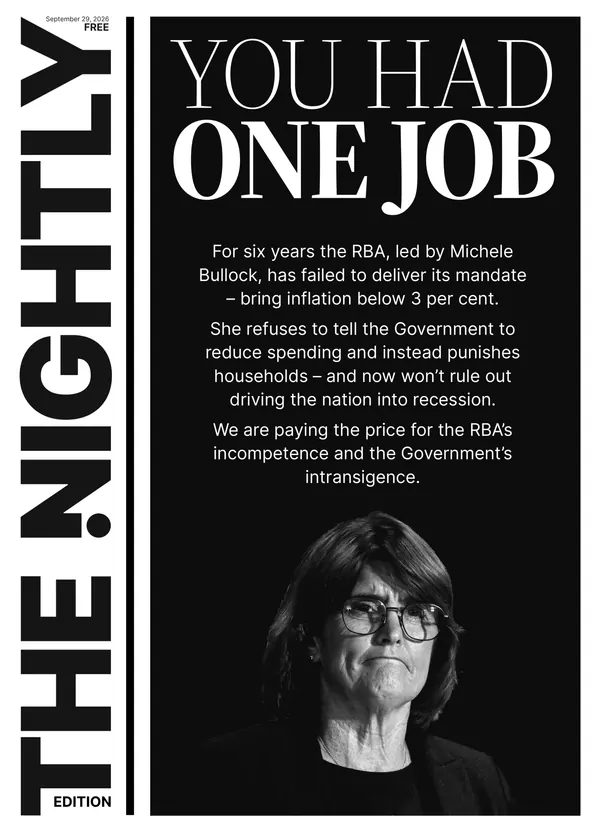
The tax debate overshadowed a more acute economic threat. Despite Dr Chalmers’ boasts of fiscal rectitude, the government plans to increase spending by $9 billion next financial year and $14 billion over three.
This is when inflation will be at its worst. Rising prices are driving up interest rates, which operate like a tax increase on everyone who has debt, and many who don’t.
To slow inflation, the Reserve Bank of Australia would like governments to cut spending. This applies to the states, including Western Australia and Victoria, which recently delivering their own big-spending budgets.
At the federal level, the government has made big promises, especially about curtailing the National Disability Insurance Scheme, but they won’t kick in until the end of the decade. Whether they will happen will depend on political will, a notoriously fickle quality.
In the meantime, extra spending on medicine, the military and interest payments are driving up the deficit. That’s why economists don’t believe the Budget will help the inflation fight, leaving it to the Reserve Bank to rely on the blunt force of interest rates.
“To slow inflation you would have needed to see some reduction in government spending,” Challenger chief economist Jonathan Kearns told The Nightly.
Property disruption
To be fair, parts of the Budget were praised by experts. Most observers would agree the aspiration to build more homes is worthwhile. How to do so is hotly contested.
Cutting off tax incentives to property investors will reduce the number of homes built, the government concedes, which is why the Budget allocates $2 billion in housing infrastructure to offset that effect. The tax changes will cost 35,000 homes. The infrastructure will create 65,000, leading to a net increase of 30,000, according to government estimates.
The Opposition, trying to fight off One Nation on its right, on Thursday proposed explicitly linking immigration to home construction. That upset building companies, which say foreign labour is needed to build houses and apartments for people already in Australia.
The national target of 250,000 new homes a year was missed by 75,000 in 2025, explaining why rents are soaring and prices aren’t falling.
The housing market looks like the part of the economy that will be most disrupted by the Budget, at least in the short term. Negative gearing will soon end for all established investment properties bought after Budget night.
The Government says it doesn’t want prices to fall, just not rise as fast. But with interest rates tipped to increase at least once more this year, property prices in Melbourne and Sydney are already under pressure.
There are few things that depress Australians more than seeing the value of their suburban blocks drop. Which is another reason that the consequences of this week Budget’s will likely be felt for a long time to come.